Hundred Points: Building an exhibition system from identity to experience
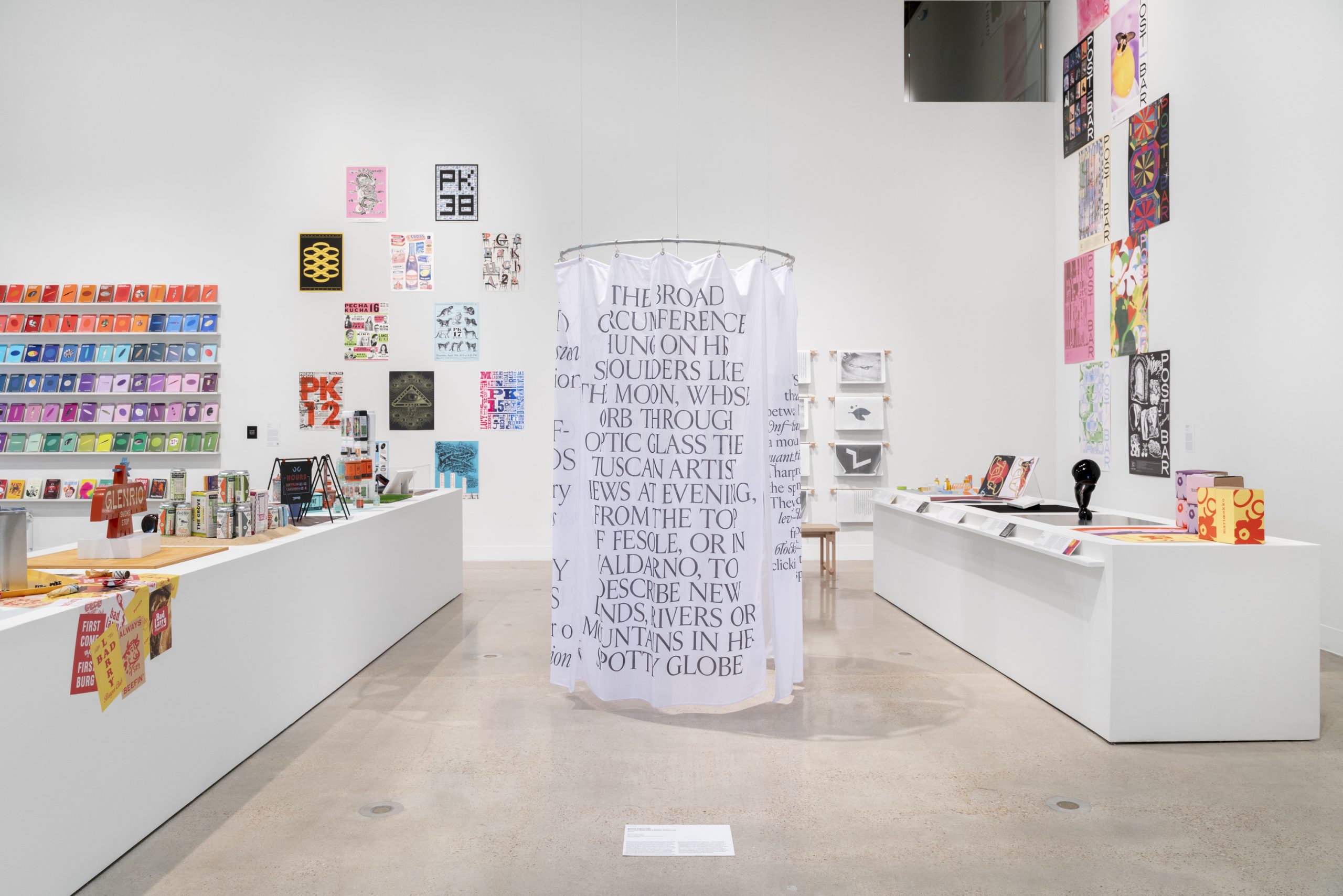
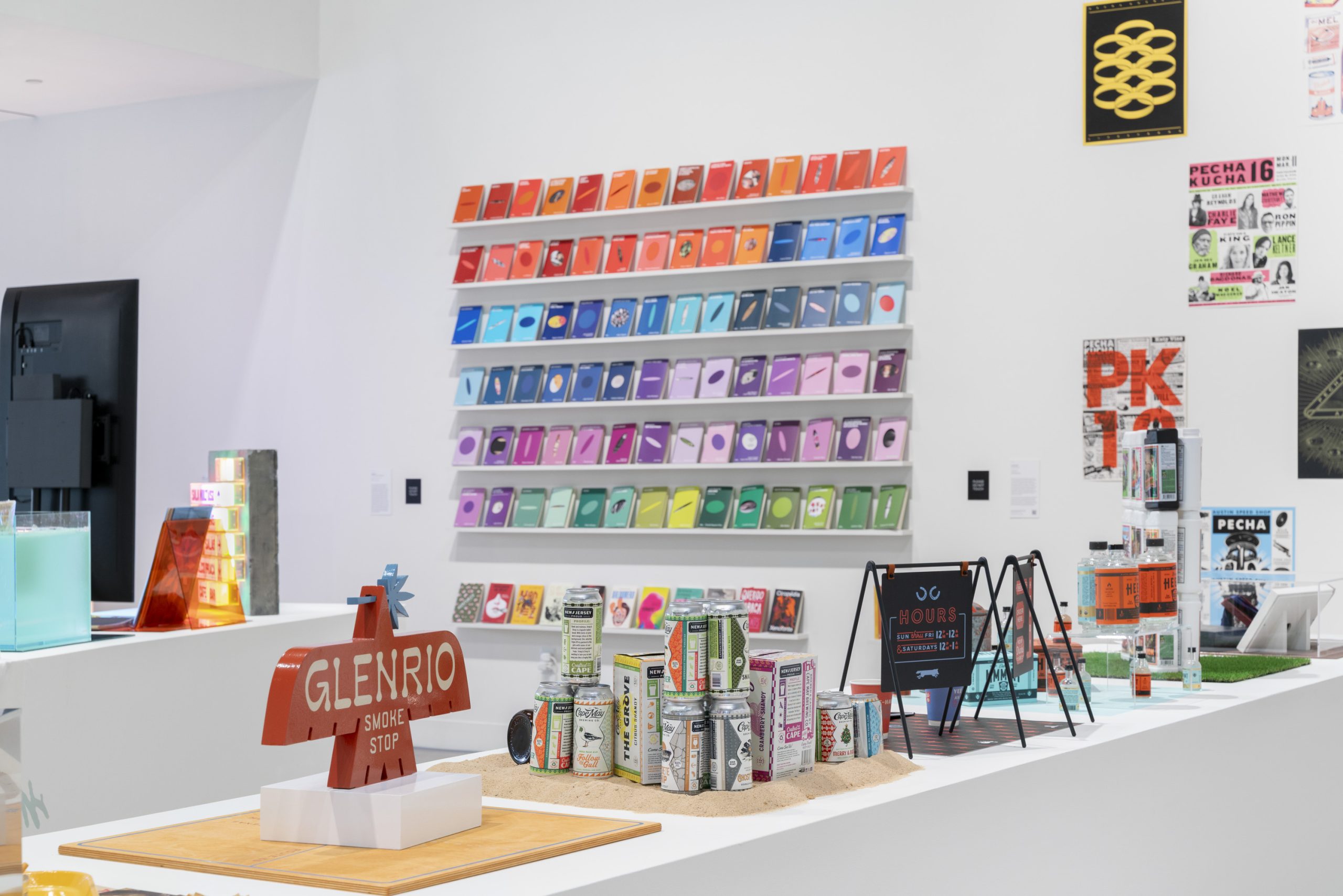
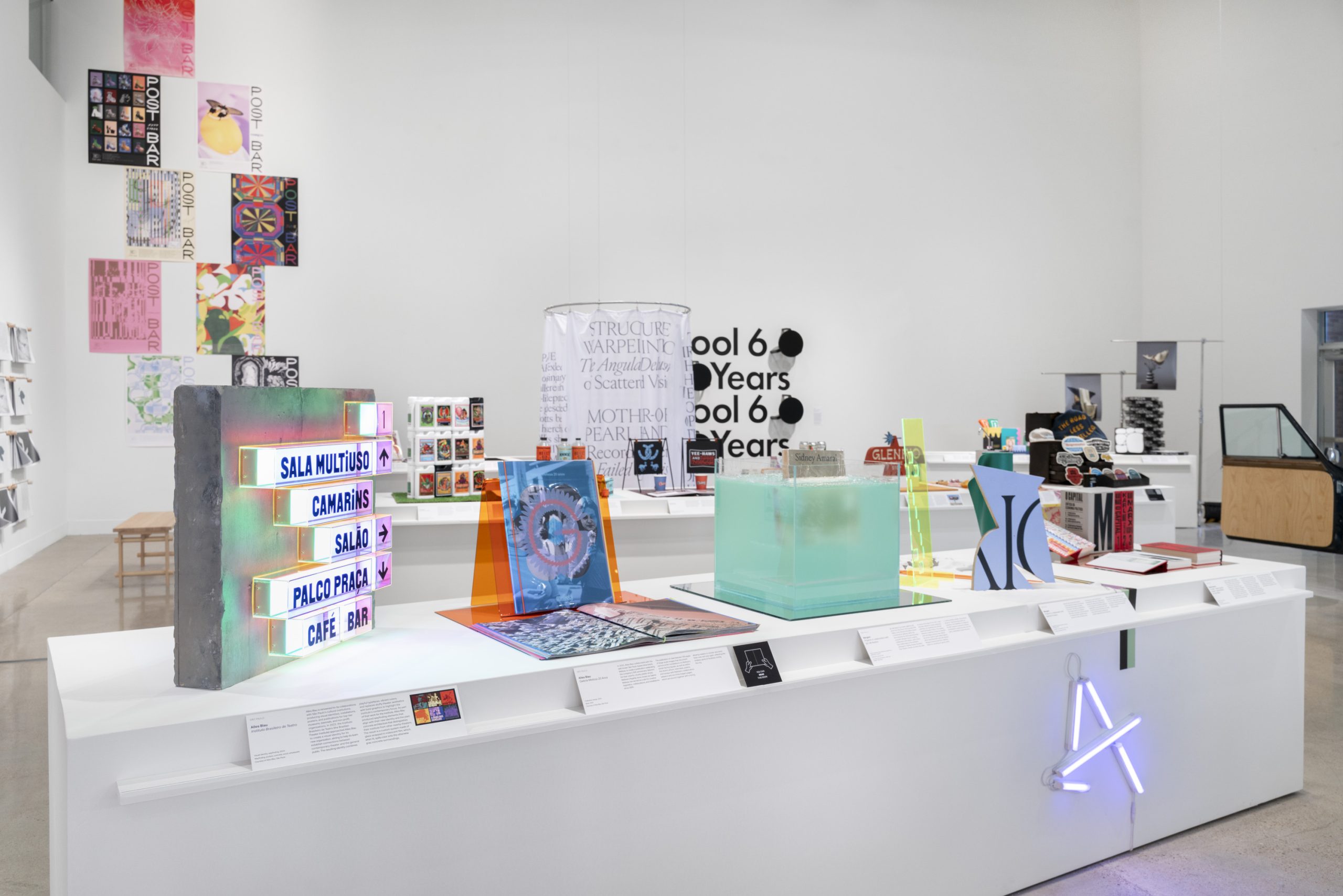
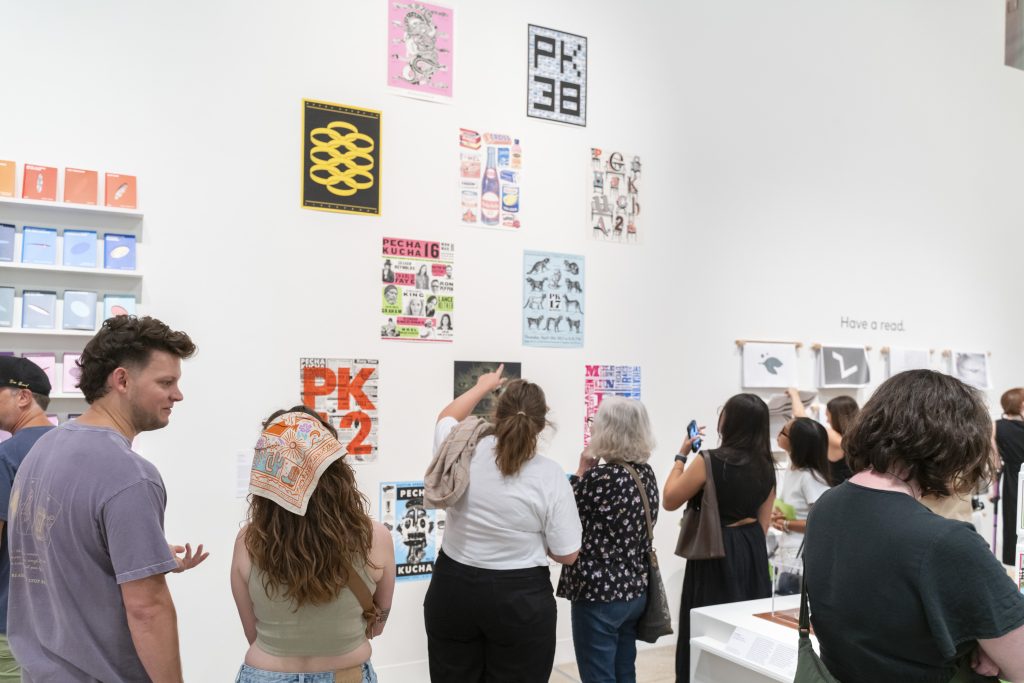
Hundred Points is a massive international graphic design exhibition, bringing together studios from four cities with strikingly different visual cultures: Austin, São Paulo, Cairo, and Helsinki.
Hundred Points consists of a tactile, three-dimensional exhibition purposely built to travel; a video feature series, and event programming specifically designed to strengthen local networks. Its goal is to elevate the understanding of visual design as a professional practice, by inspiring audiences to reflect on how design is influenced by technology, community and geography.
It presents a deep dive into the work of 16 of today’s most exciting designers and studios from around the world, featuring 46 projects across branding, editorial, motion, packaging, typography, and environmental design. The ultimate goal of Hundred Points is to elevate the understanding of visual design as a professional practice through an engaging, tactile, three-dimensional, human experience — and by building a model that can be replicated and adapted to travel to new locations.
Curated by Lope Gutiérrez-Ruiz (co-founder of In-House International), Hundred Points is presented in partnership with Fusebox Festival and the Visual Arts Center at the University of Texas at Austin. It premiered in summer of 2025 at the VAC, spanning 4,000+ sq ft of work, artifacts, and activations.
Challenge
Creativity is in part about reacting to cultural conversations in real time, and creating work with a production value that endures. We intentionally develop Hundred Points to address two of the most interesting issues of today’s design world:
1) Design is Undergoing a Perception Shift: The field of design is experiencing a transformation not seen in decades: the rise of artificial intelligence is rapidly altering public perceptions of design, as digital tools are increasingly (and mistakenly) seen as replacements for craft rather than as tools that augment it.
So, how can we emphatically reintroduce the concept of design as human?
and
2) Design Doesn’t Happen in a Vacuum: For design to flourish, strong communities are essential. After a global pandemic and a shift to remote work, community-building is more challenging than ever.
So, how can we invite our audience to actively participate in their creative communities?
Solution
The exhibition and all its touchpoints were treated as a designed medium — an environment built to invite participation rather than passive consumption. Our approach to the two challenges shown above was simple:
1) How can we emphatically reintroduce the concept of design as human?
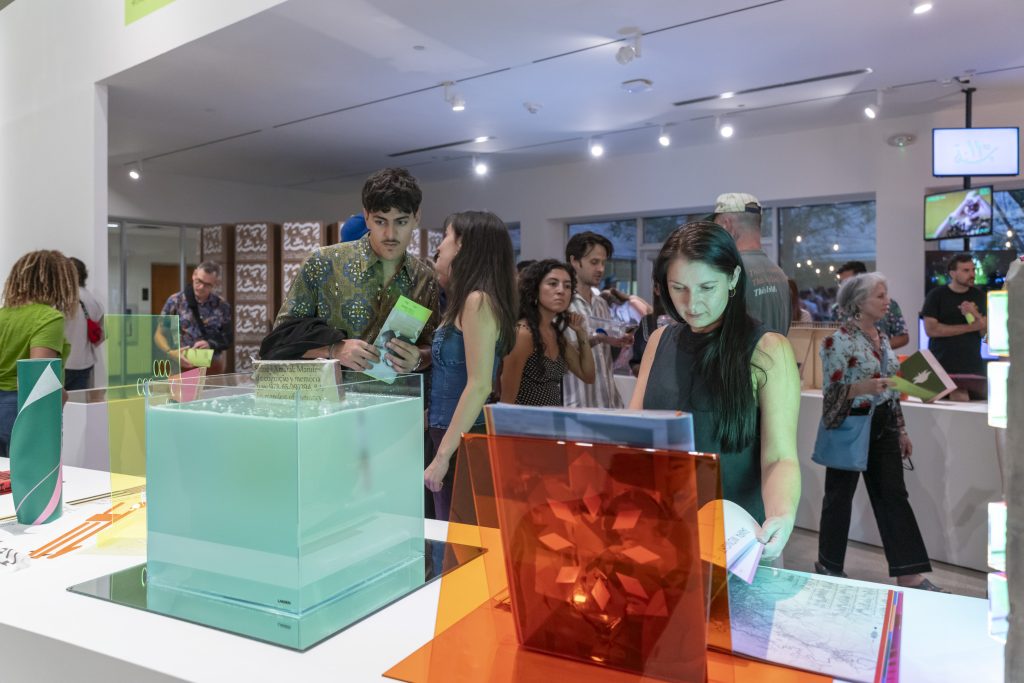
By breaking away from flat or screen-based exhibition design and purposely building a show where audiences can view and interact with 3D objects, we reintroduce the idea that everything around us has been designed by someone. And that aspects that make design truly successful, like research, sketching, prototyping, and relationship-building, may benefit from digital tools — but are irreplaceably human.
2) How can we invite our audience to actively participate in their creative communities?
By providing examples of great work developed by studios that are part of strong communities, in multiple scenarios and with very different limitations. From multi-million dollar studios designing across continents to immigrant students huddling together; all have found tremendous value in being part of a creative community, no matter the shape or size of it. And, by developing events and programming where students, professionals, manufacturers, and brands can meet and build relationships.
These two notions informed not only all decisions on curatorial and programming; but also on spatial design, exhibition design, and branding:
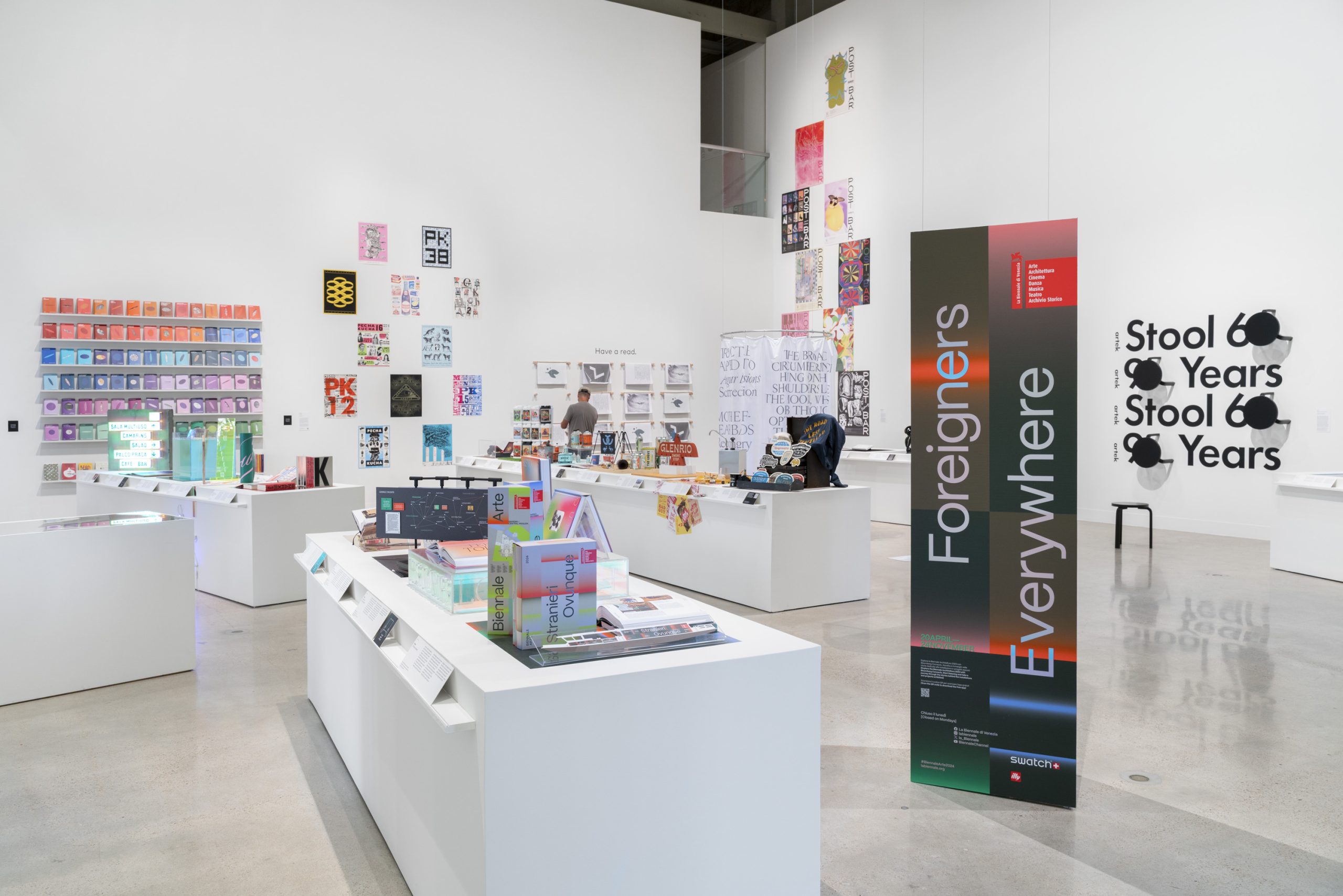
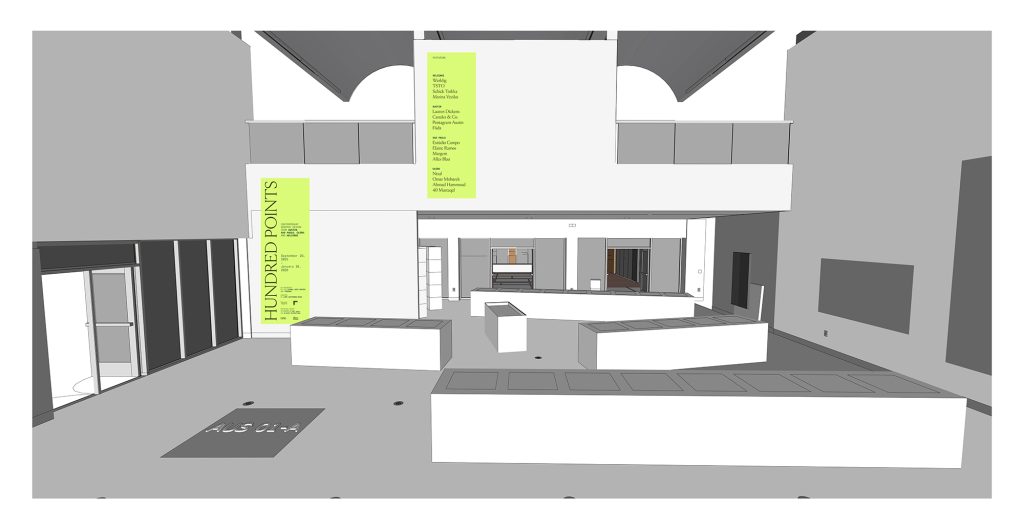
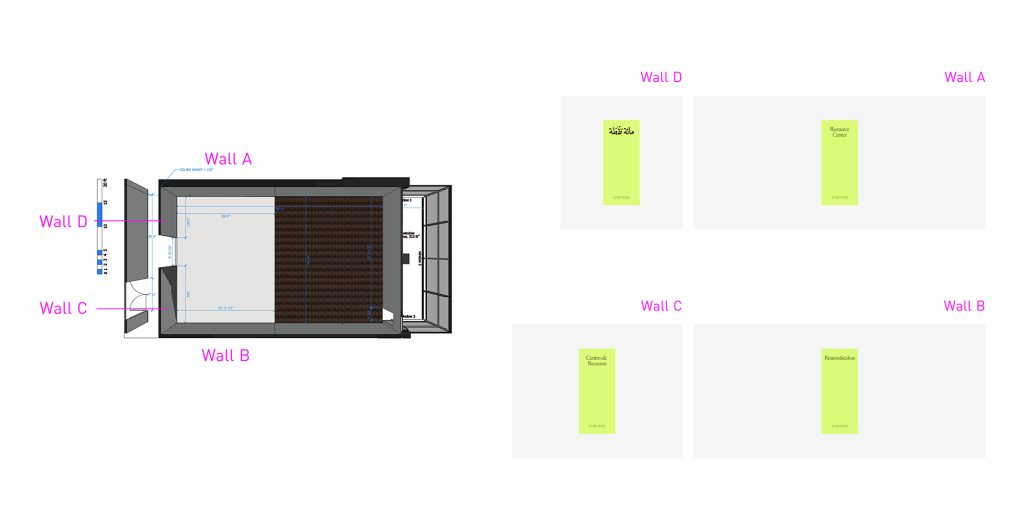
Spatial Design: Entire exhibition was built using a system optimized for fast development / iteration (during curatorial stages), clear sight-lines across projects in the large exhibition space, and intuitive navigation through the four-city structure — emphasizing rhythm, clarity, and delightful surprises (including Easter-egg-like-moments).
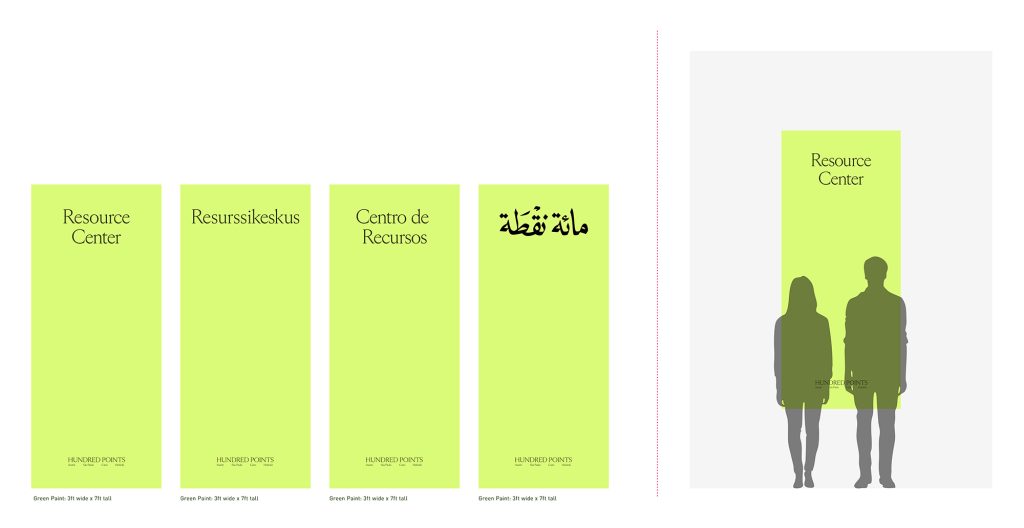
Exhibition Design: We created a multi-model storytelling system, including museum labels (didactics), gallery guides, project deep-dives on video, tour guidelines, a temporary library of additional resources, and more; made to adjust to the different degrees of engagement expected from museum visitors to organized tours.
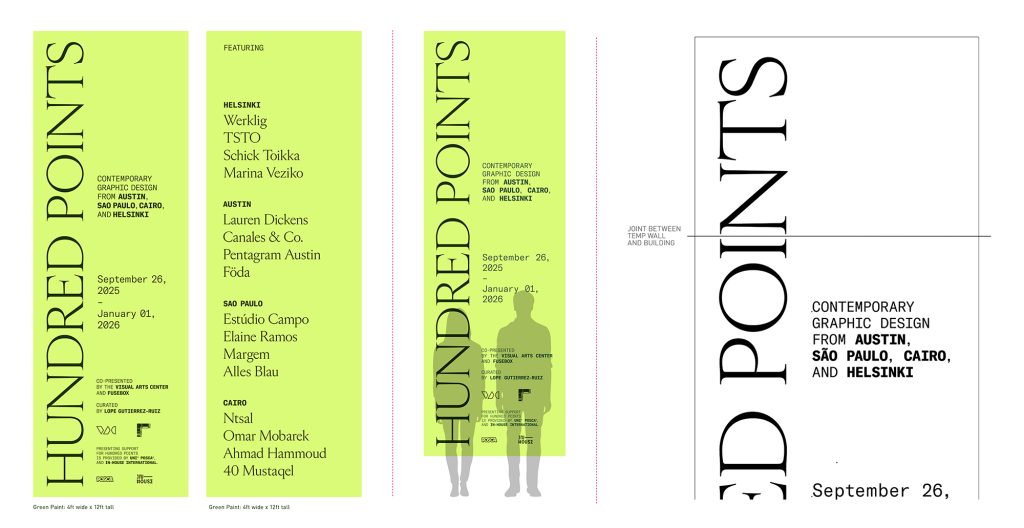
Branding: And lastly, we built an elegant, minimalistic visual identity, made to hold radically different bodies of work while maintaining a singular, recognizable presence. This was achieved by anchoring it in two constant elements: the use of the Old Style serif font Edict by Shick Toikka (featured in the show), contrasted with a very 2025-26 color palette: astrobright neon green overlaid with dark green hues. This was used across all communications and touchpoints, from wayfinding to event posters.
Results
Hundred Points was a massive success, with an opening night that broke historical records of attendance at the Visual Arts Center, a run of events that introduced the museum to new audiences, with most of these events being at capacity — including a conference titled “Studio Talks” that brought designers from São Paulo, Cairo and Helsinki to meet their Austin peers and academic community.
The full scope of the Hundred Points exhibition included three areas or sub-projects / brands:
Main Exhibition: Hundred Points
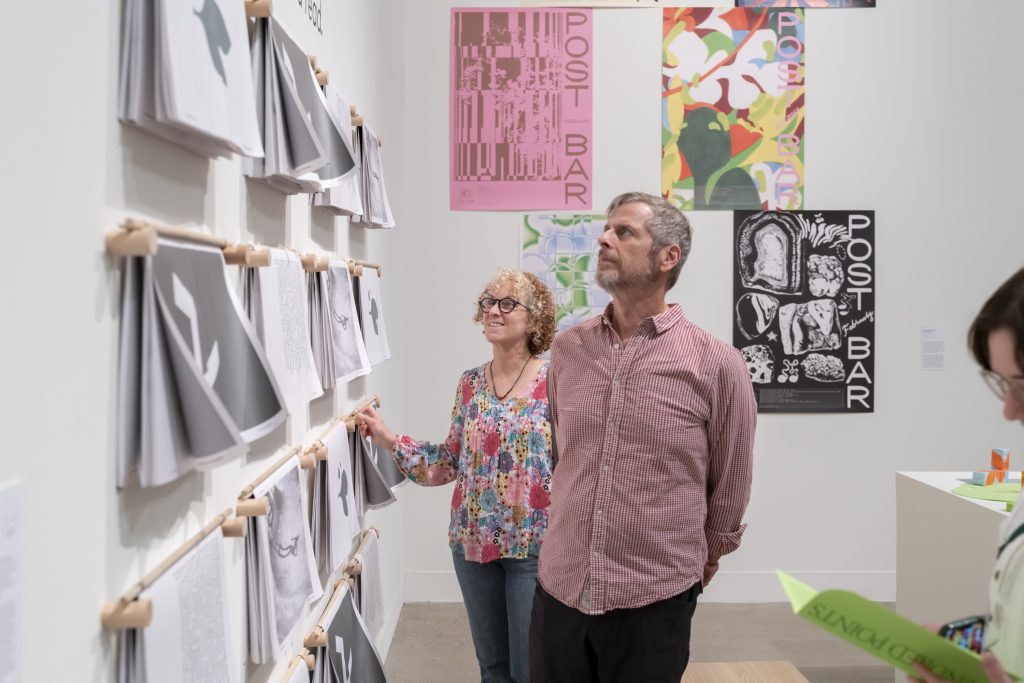
An ambitious dynamic survey of contemporary graphic design across four global design centers, including 46 projects three dimensional projects.
Temporary Design Library: The Global Edit
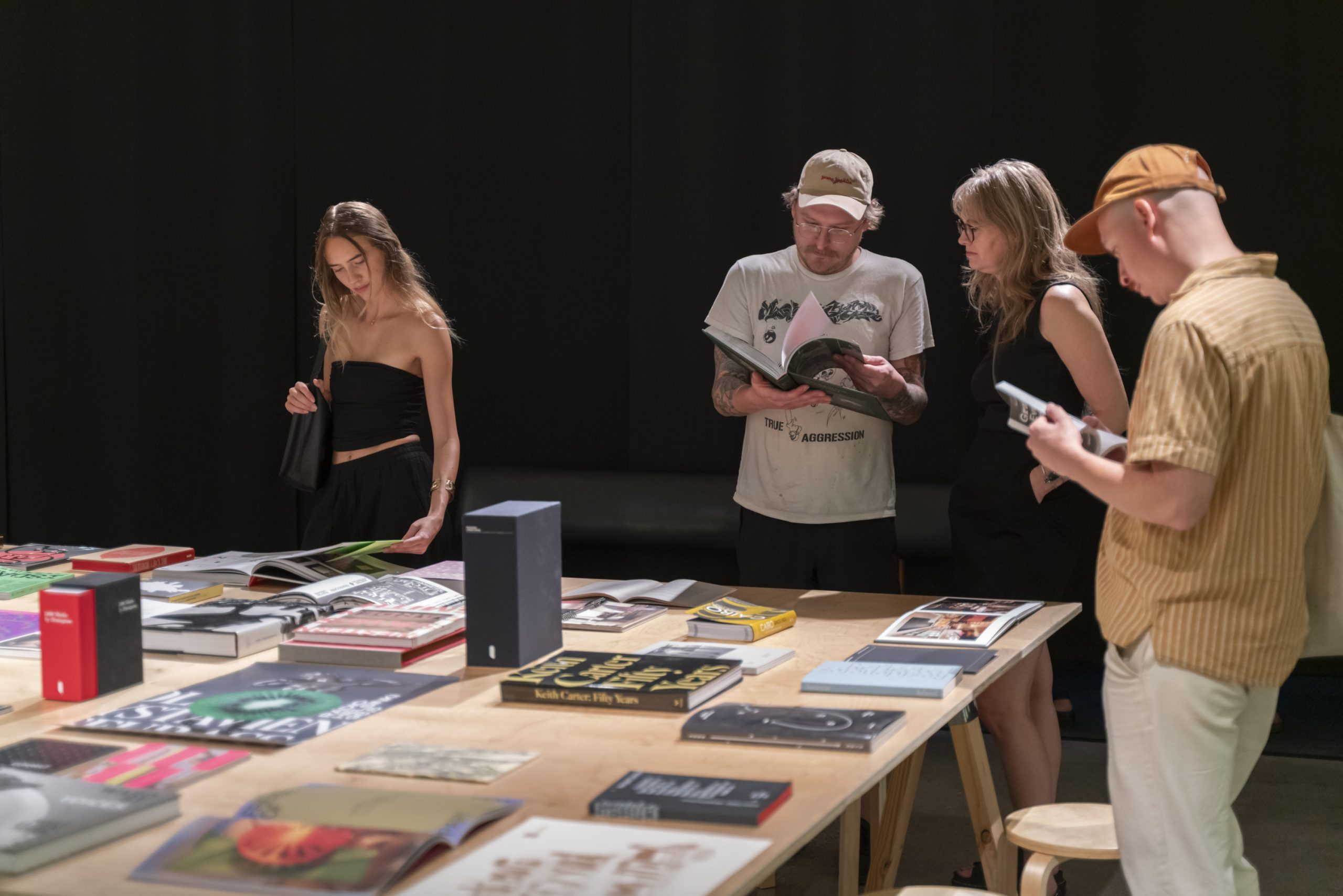
A curated, public-facing library of rare publications and materials, designed for browsing, studying, and discovery; with some volumes showcased in the United States for the first time.
Projection Room: The Hundred Points Journal
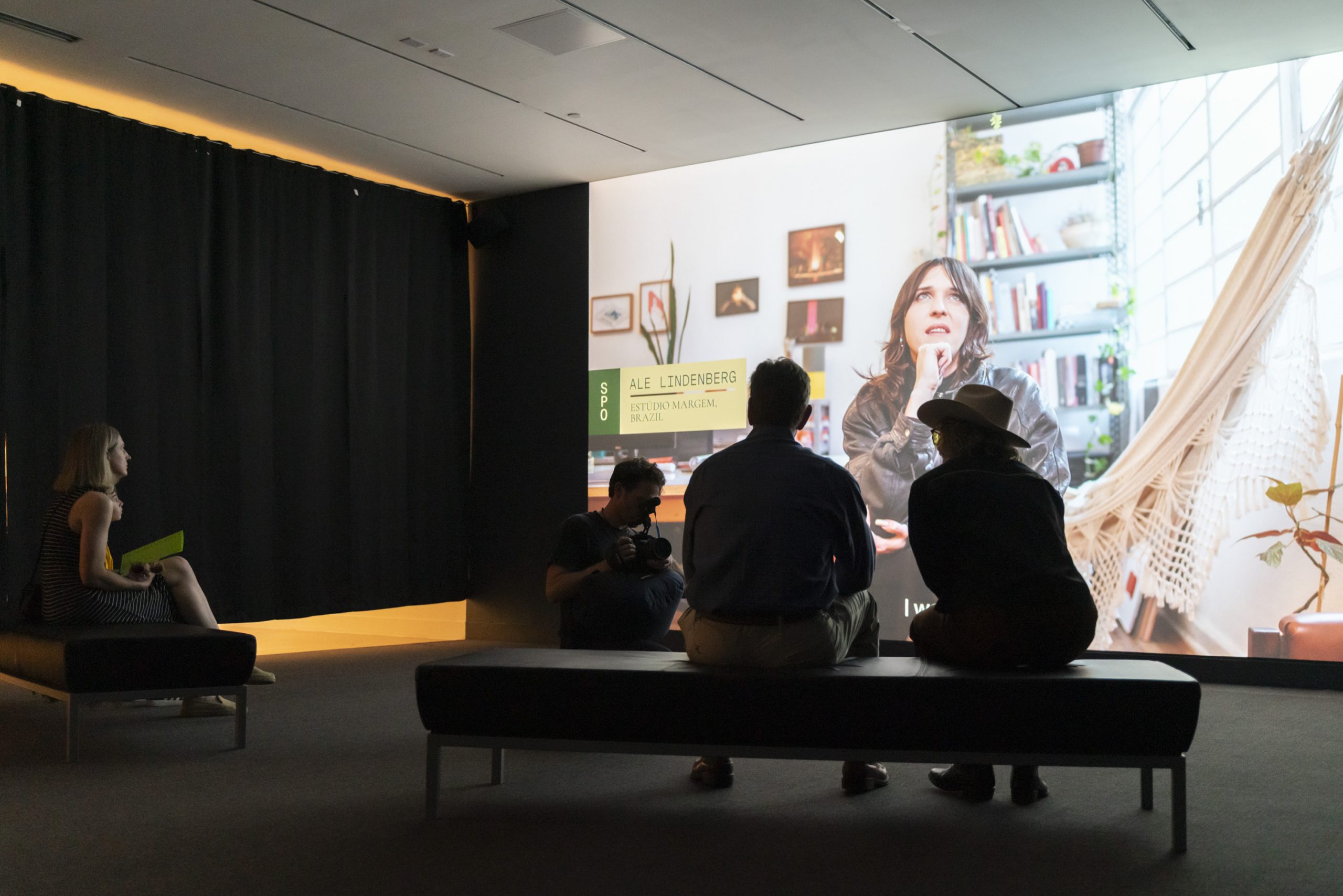
An interactive documentary experience in which designers respond to questions about creative life, giving visitors a direct window into mindset, methods, and meaning. For this project we traveled to the cities featured in the show, and together with filmmaker Brad Abrahams filmed interviews with designers at their studios. We then compiled and edited the interviews, and built an interactive touchscreen and plinth, that allowed museum visitors to ask specific questions to the studios; rather than just watching a series of videos passively.
Exhibition documentation photos by Alex Boeschenstein.
The exhibition is beautifully curated and thought-provoking, offering visitors a global view of visual communication through the lens of four energetic, electric design hubs.
Kim Tidwell,
Editor, Print Magazine
Breakthrough: Climate Impact by Design
Before breakthroughs can shape the future, they need to compel people to adopt change.
Shiftmakers: Climate Impact by Design
BrandingStrategyMessagingCampaigns & CreativeAnimationCustom Typography
Goma: Born to stand out
BrandingStrategyMessagingIllustration & Data VizAnimationPrint & PackagingCustom Typography
Fusebox: Capturing the power of unforgettable live experiences
BrandingStrategyMessagingCampaigns & CreativeAnimationCustom Typography
findhelp: Developing voice and strategy for connected social care
BrandingStrategyMessagingCampaigns & CreativeIllustration & Data VizDigital & WebAnimationCustom Typography
Ford Foundation: Making a new reality
Illustration & Data VizPrint & Packaging